The DJ Moore Overtime Catch: Incomplete, Questionable — and Possibly Irrelevant
The overtime touchdown credited to DJ Moore immediately sparked controversy, with replay angles suggesting the ball may have moved as Moore completed the catch and contacted the ground. While the legality of the catch itself is debatable, the broader context of the play complicates the argument — because even an overturned ruling may not have changed the outcome.
The Catch Itself: A Legitimate Question
Under NFL rules, a receiver going to the ground must maintain control of the football throughout the entire process of the catch. If the ball moves and that movement is aided by contact with the ground, the pass is incomplete.
Video replays of the play — including this broadcast clip of the catch attempt
https://www.youtube.com/shorts/BpbX-6f6KnE
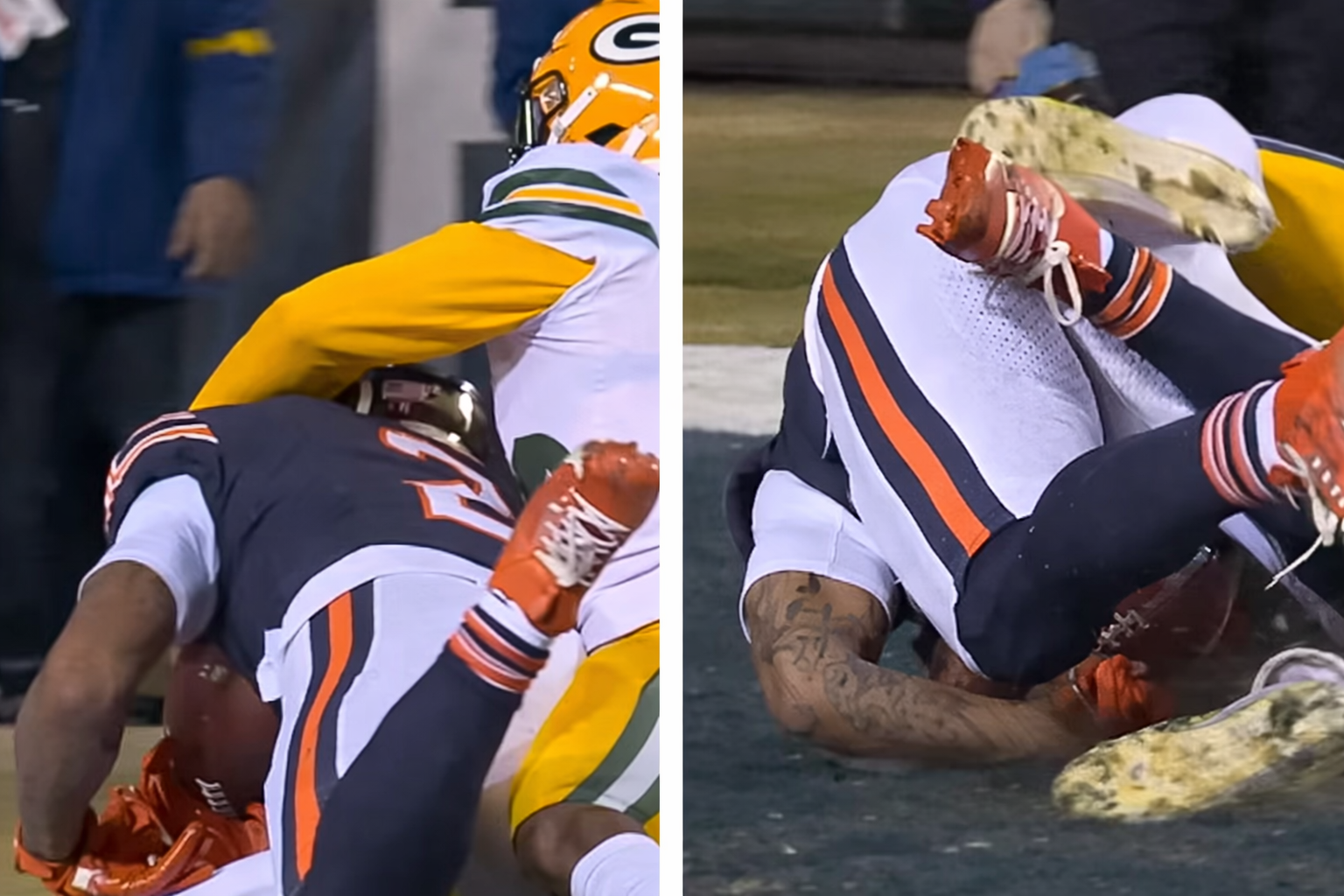
— show Moore initially securing the ball, but slow-motion angles raise several questions:
- Noticeable ball movement as he hits the turf
- The nose of the football appearing to make contact with the ground
- Control that seems to be fully re-established only after that contact
By a strict reading of the rulebook, there is a credible argument that the pass did not survive the ground and could have been ruled incomplete.
Overtime Reality: No Challenges, but Automatic Review Still Applies
Because the play occurred in overtime, no coach’s challenge was permitted. That aspect of the ruling is absolute.
However, this was still a scoring play, which means it was subject to automatic review by the replay official. The lack of a visible stoppage or extended referee discussion strongly suggests the booth reviewed the play quickly and allowed the ruling to stand under the league’s “clear and obvious” standard.
Whether that judgment was correct is debatable — but procedurally, the play was almost certainly reviewed.
The Overlooked Factor: Defensive Pass Interference
What has been largely overlooked in the debate is the coverage by Keisean Nixon before the catch attempt.
— shows Nixon making contact with Moore before the ball arrives.

On that same angle, Nixon appears to:
- Initiate early and sustained contact
- Play through Moore’s arms rather than the football
- Fail to fully turn his head to locate the ball
By NFL standards, that level of contact in the end zone meets the threshold for defensive pass interference.
Why the Catch Ruling May Not Have Mattered
If the catch had been overturned:
- The defense still could not challenge
- Officials could have ruled defensive pass interference
- The ball would have been placed at the one-yard line
Given the circumstances, a touchdown on the next snap would have been the most probable outcome.
In that sense, the ruling on the catch may have simply short-circuited what was already trending toward a goal-line scoring sequence.
Final Assessment
- The catch: Legitimately questionable under the “survive the ground” standard
- The review: Almost certainly occurred, even without a visible stoppage
- The outcome: Likely unchanged due to probable defensive pass interference
Fans can fairly criticize the consistency of replay enforcement, but in this case, the outrage over the catch itself may miss the bigger picture: the defense was likely beaten before the ball ever touched the ground.
Our final conclusion is that the play should have been ruled incomplete with DPI, spot the ball on the 1 yard line, and resume play. I guess the refs felt like it was time to end Green Bays pain and suffering.